
Every local authority I speak to wants the same thing: more people using public transport and active travel, with less congestion and better air quality to show for it.
England's councils have recently been allocated £626 million for walking, wheeling, and cycling schemes between 2026/27 and 2029/30. That's welcome, but anyone working in local transport knows that capital funding for new infrastructure is one thing; finding the ongoing revenue to run and maintain a bike share scheme year after year is another challenge entirely.
Here's what I think matters most when local authorities are deciding whether and how to introduce a bike share scheme.
We work with councils through three funding models for bike sharing schemes: advertising‑funded, subsidy‑funded and sponsorship‑funded. How much of a scheme's cost can be offset through advertising revenue depends on the commercial potential of a given location. A busy city centre with strong advertising demand will support a different funding balance than a smaller town or a predominantly residential area.
In some places, advertising revenue can cover the full operating costs of a scheme. In others, it reduces what a council needs to contribute, rather than removing the need for public investment altogether. That's exactly why we offer the subsidy and sponsorship routes alongside it so there's a workable model for any area, not just the most commercially attractive locations.
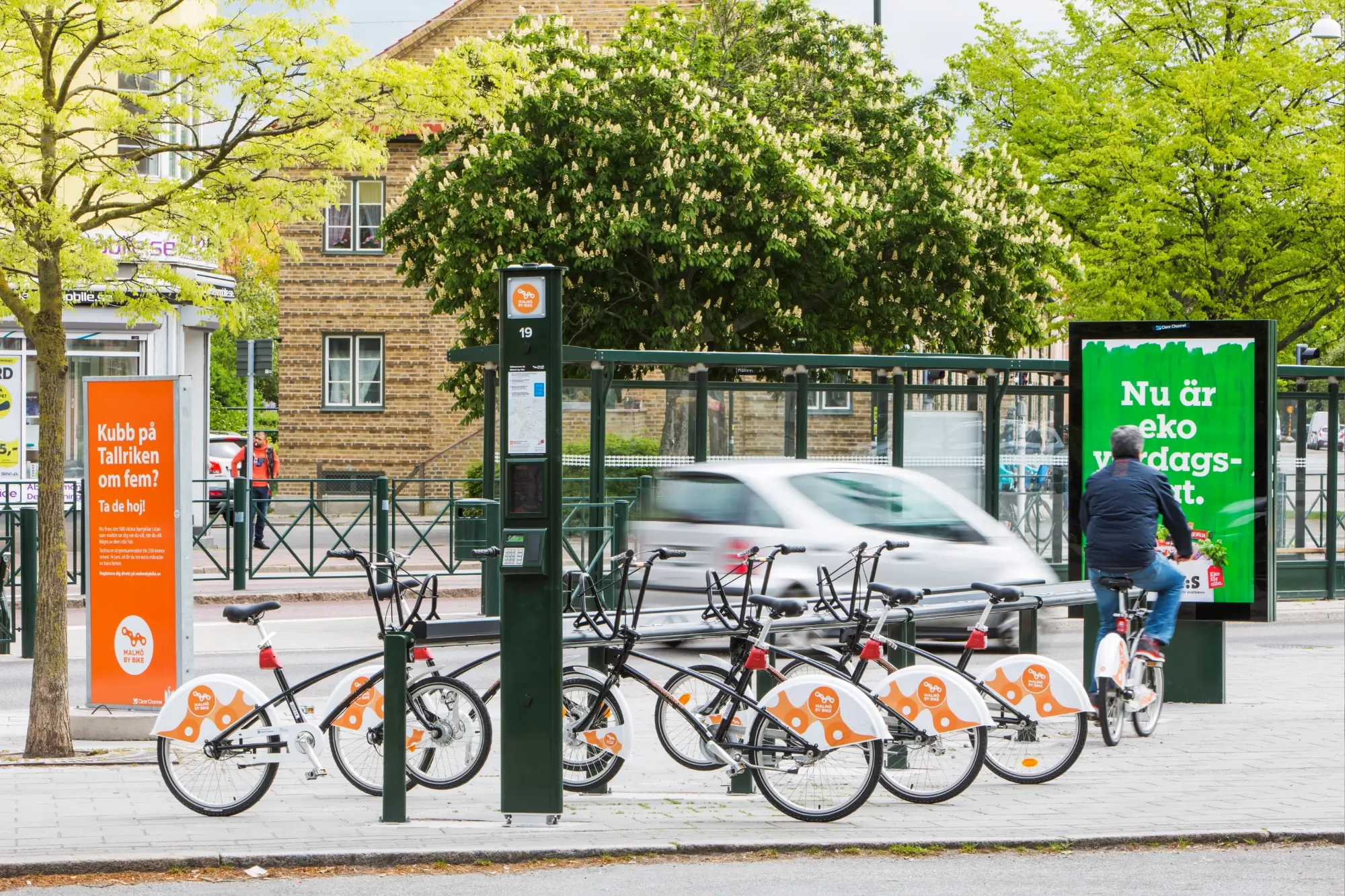
Such options may deliver greater longevity for the bike schemes as well. For example, in Malmö, Sweden, where we have been operating the bike sharing scheme since 2015, the contract has generated around €4.5 million in media revenue in 2024, alongside smaller contributions from bike fees and rent. The partnership has proved durable enough that it's now being extended by a further five years to September 2031, with the bike scheme also being expanded with more stations and bikes.
This illustrates the kind of advertising‑led, commercially‑sustained model we'd aim to build for a UK local authority, scaled to local demand.
Most bike share operators do one thing: they operate bikes. Bauer Media Outdoor's starting point is different. We already work with local authorities across their public infrastructure estate – operating more than 20,000 bus shelters on behalf of 180+ local and transport authorities in the UK – and have our own, in‑house advertising sales capability.
That matters more than it might sound. Because we can sell advertising space ourselves, we can fold bike schemes into the same commercial model we already successfully use for street furniture. This means councils get a single, accountable partner for the public realm, rather than juggling separate contracts and suppliers.
Whatever the funding mix, a scheme shouldn't be held to a lower standard because part of its cost is covered commercially. This is exactly why accreditation matters, and why we went through CoMoUK's accreditation process for Bauer Media Bikes. It's a useful discipline for operators, and a genuinely useful filter for councils. My advice to any local authority evaluating a scheme is simple: ask whether the operator is CoMoUK accredited, and if not, ask why.
Funding constraints don't have to mean lower ambition and councils should expect a clear, honest conversation from any operator about which funding model fits their area. Active travel funding settlements may come and go. The schemes that last are the ones built on sound standards, the right local fit, the right partner, and a funding model that’s tailored to the local authority.