
Integration of sustainable transport options is something that we care passionately about at CoMoUK, the national charity for shared transport.
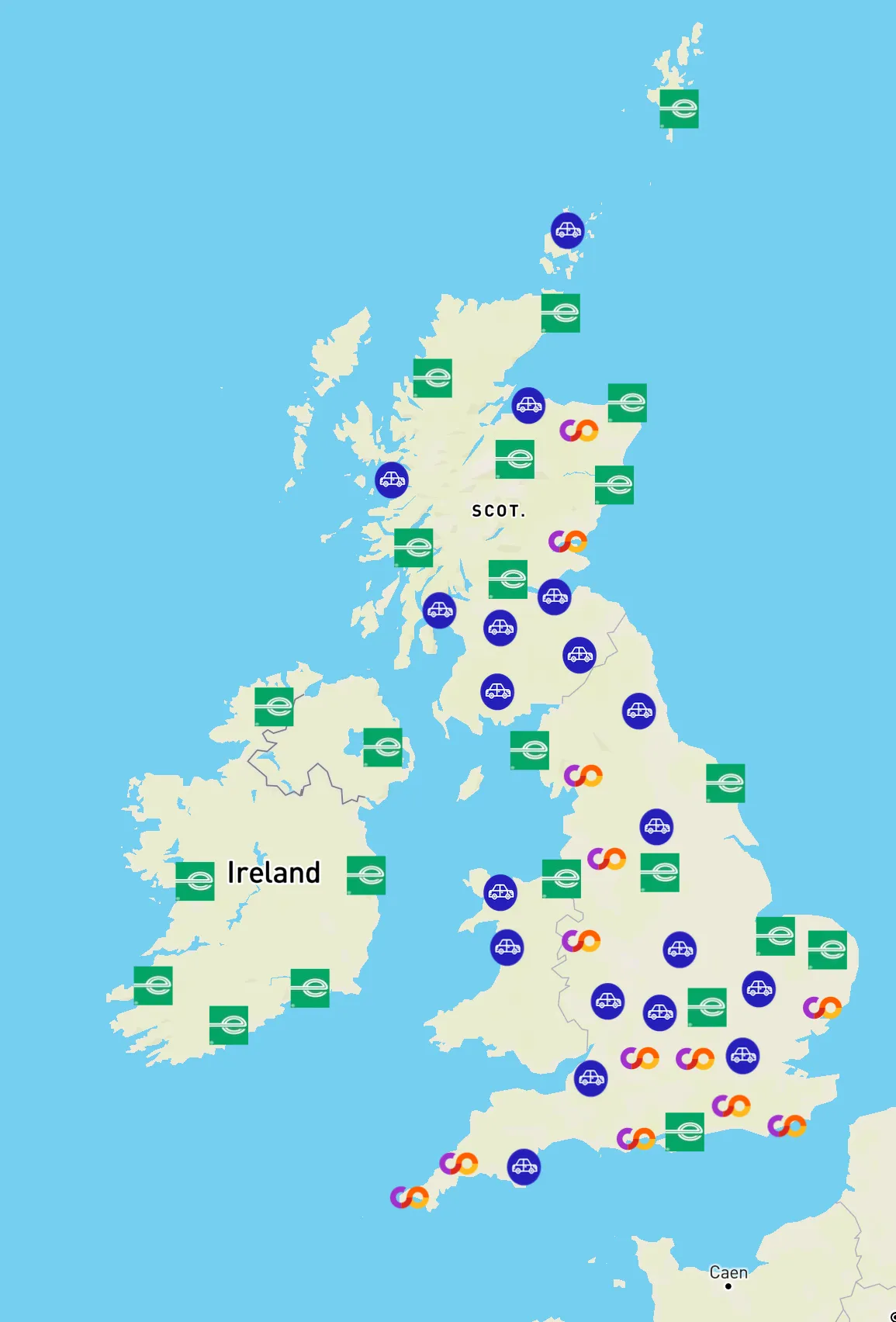
That is because it is something that shared transport users need, in turn because they use public transport and active travel far more than average per person levels. This holds true whether you look at the whole of the country or just one city or region. It is also a common finding internationally. We know this from our decades of research with shared transport users overlaid with shared transport operator data; you can view the shared car data or explore the shared bike data for more details.
It is also because we see additional benefit in bringing options together, whether physically on the ground (for which mobility hubs are a great option) or digitally. Our pop-up hubs programme has been gathering valuable evidence on how ‘even’ temporary infrastructure that simply co-locates with existing shared or public transport options brings a raft of transport and other benefits.
So it was with purpose and some hope that I went to Leeds in late 2024 for the launch of the idea of an integrated national transport strategy and with that same purpose and hope that I opened what that has turned into, the Government’s new Better Connected strategy.
Let’s start with the good news. From a shared transport perspective, there are some important potential steps forward. More on that word ‘potential’ in a second. But let us celebrate new ground established with first-ever (for a UK Government) commitments to scale up shared transport and explicit connections made between shared and other sustainable transport modes – along with potential doors open to rethink how transport is designed, assessed and prioritised.
While there is a level of recognition here that CoMoUK has been pushing for years to see, there was that word potential again too. For while we do mark this important moment in shared transport’s journey to the mainstream of policy-making in this country, we also note that there are no new targets, no funding and no seismic shifts in wider policy here.
Given that, it is all the more frustrating to find multiple missed opportunities in ‘Better Connected’ to join up shared transport with, for example, rail or active travel. Ten of these missed connections are scattered through it, ranging across rural, suburban and urban contexts.
Even worse are the outright absences, with nothing of substance on lift sharing/car pooling and precious little on mobility hubs. This is despite the UK having made significant progress on the latter in particular – we estimate there will be around 220 publicly-funded hubs completed by the end of 2027.
The insubstantial element of Better Connected offers us a paradox. On the one hand it opens up new opportunities, particularly given the planned changes to the Green Book, DfT’s strategic modelling capability, its areas of research interest, its new appraisal, modelling and evaluation strategy, its analytical library and more. Perhaps these can be turned into opportunities to make connections that we feel should already have been made between shared transport and other modes; between different types of physical or digital infrastructure; between transport planning and spatial planning (on which Better Connected has a lot of promising things to say, but which is not a policy area DfT controls). We will be pursuing all this vigorously.
We’ll also be pursuing how all this is meant to actually land in local decision-making. In theory the English Devolution and Community Empowerment Bill – soon to become an Act – brings more power to more local layers of government. This could hold some further promise, because in my seven years in this job one of the most heartening aspects has been the ground gained at local level. What would have been breathtakingly cutting-edge to hear from a local authority about shared transport and integration in 2019 is, among some of them at least, relatively mainstream in 2026.
Yet when we in shared transport look at the existing and potential future ingredients – for example in the local outcomes frameworks or in Better Connected – we find shared transport is almost entirely ignored. Nor does it feature in any DfT dataset. In a world where local authorities are bigger and more self-determining – but around a set of priorities defined at the centre that has warm words for shared transport but no specific commitments – there is an obvious risk that the progress made will be backwards, not forwards.
We will be putting our best endeavours into ensuring that is not the case and if you would like to be in touch about that, drop me a line on richard@como.org.uk.